
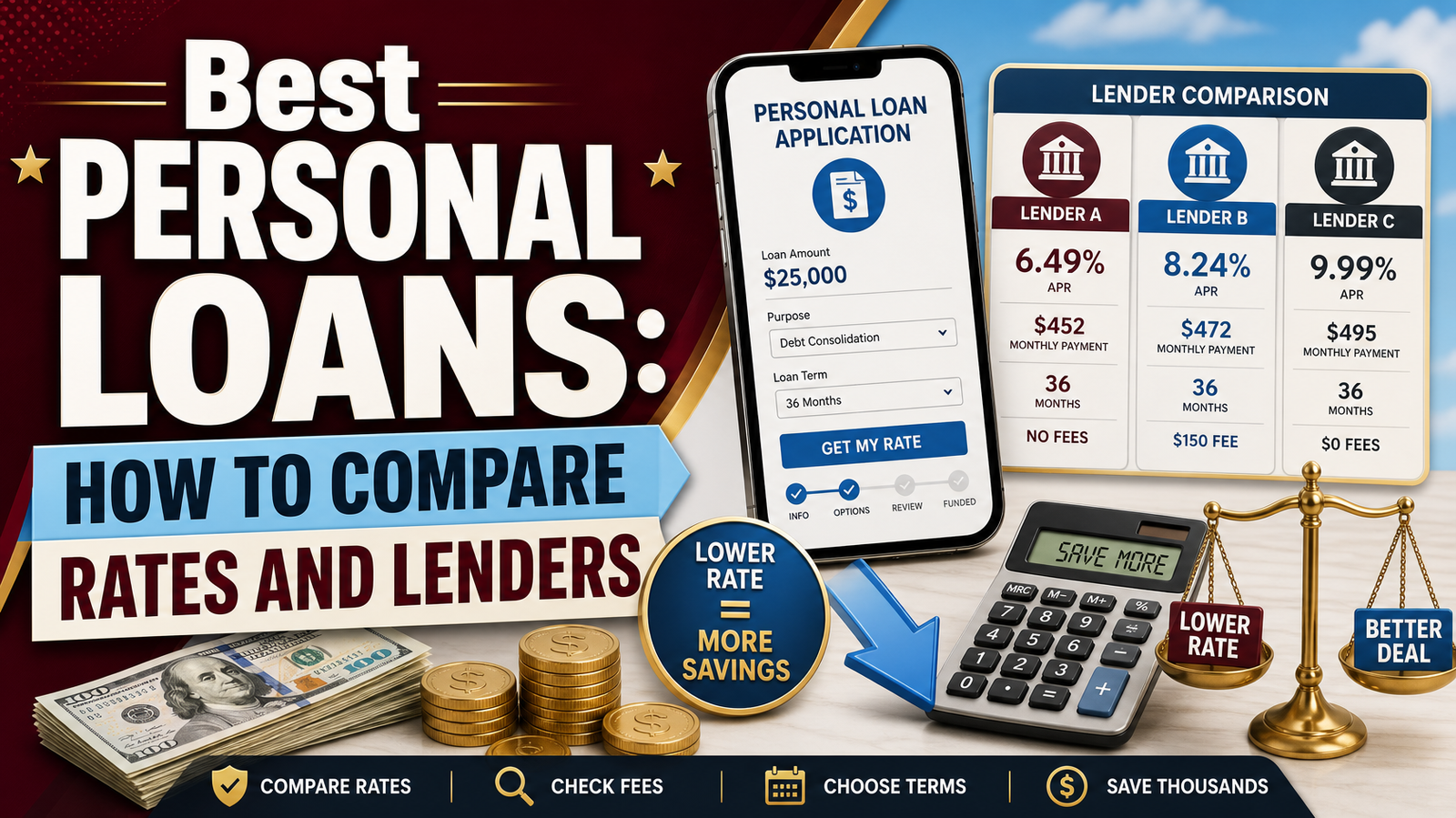
Finding the right personal loan can make a big difference in how you manage a major expense. Whether you are planning a home improvement project, consolidating existing debt, or covering an unexpected bill, choosing a loan should never be based on approval speed alone. The interest rate, annual percentage rate (APR), fees, repayment period, and lender requirements all deserve attention.
The challenge is that personal loan offers are not always easy to compare. One lender might advertise a competitive interest rate but charge an origination fee, while another may offer a different repayment period or eligibility requirements. Looking at just one number can leave you with an incomplete picture of the actual borrowing cost.
So, how do you find the best personal loans in the USA? Start by comparing the complete loan terms, checking the lender’s requirements, and understanding how much you will repay over time.
At NexInfoHub, we have researched and cross-checked the financial information in this guide against official government and financial institution websites, including the Consumer Financial Protection Bureau (CFPB), Federal Trade Commission (FTC), and lender resources. Our goal is to explain personal loans in straightforward language so readers can make more informed financial decisions.
What Is a Personal Loan?
A personal loan is an installment loan that allows you to borrow a specific amount and repay it through scheduled payments over an agreed period. Depending on the lender and product, repayment terms, interest rates, and borrowing limits can vary.
Many personal loans are unsecured, meaning you do not need to provide an asset, such as a vehicle or property, as collateral. Instead, lenders generally assess your credit history, income, existing debts, and other information to decide whether to approve your application.
Some personal loans are secured by collateral. With these products, the lender may have rights over the pledged asset if you fail to meet your repayment obligations.
People commonly use personal loans for eligible expenses such as:
- Debt consolidation.
- Home improvement projects.
- Major personal purchases.
- Moving and relocation costs.
- Certain unexpected household expenses.
- Other purposes permitted by the lender.
Before applying, check whether the lender allows your intended loan purpose.
How to Compare the Best Personal Loans
There is no single personal loan that is best for everyone. The right choice depends on your financial circumstances and the terms available to you. These are the most important factors to compare before accepting an offer.
1. Compare Personal Loan APR, Not Just Interest Rates
One of the biggest mistakes borrowers make is comparing personal loans using only their advertised interest rates.
The interest rate represents the cost of borrowing the principal amount. The annual percentage rate (APR) provides a broader measure because it includes the interest rate and certain additional loan charges.
For example, imagine two hypothetical lenders offering similar loan amounts. Lender A advertises a lower interest rate but charges an origination fee. Lender B has a slightly higher interest rate but no origination fee. Comparing their APRs can help you understand the difference in borrowing costs.
When reviewing an offer, check:
- The interest rate.
- The APR.
- Whether the rate is fixed or variable.
- Origination charges and other applicable fees.
- The total repayment amount.
The CFPB explains the difference between interest rates and APR and recommends comparing borrowing costs rather than relying on interest rates alone.
2. Check Origination Fees and Other Loan Charges
An origination fee is a charge some lenders apply for processing and arranging a loan. It may be calculated as a percentage of the amount borrowed and can sometimes be deducted from the loan proceeds.
Consider this hypothetical example:
| Description | Amount |
|---|---|
| Approved loan amount | $10,000 |
| Origination fee (5%) | $500 |
| Money received | $9,500 |
In this example, you receive $9,500 after the fee is deducted, but the agreement may still require you to repay the full $10,000 principal, along with applicable interest.
Other charges may include late payment fees, returned payment fees, and certain optional insurance products.
The CFPB specifically advises borrowers to examine loan disclosures for fees before agreeing to a personal installment loan.
A loan with no origination fee is worth comparing, but it is not automatically the cheapest option. Consider the APR and total cost together.
3. Choose a Repayment Term That Fits Your Budget
Your loan term is the amount of time you have to repay the borrowed money. Lenders offer different repayment periods depending on their products, loan amounts, and eligibility requirements.
A shorter repayment term usually results in higher monthly payments, but it can reduce the amount of interest paid over the life of the loan.
A longer term may make monthly payments smaller, but you could pay more interest overall.
For example, imagine borrowing $10,000 under two different hypothetical repayment arrangements:
- 36-month term: Payments are generally higher, but the debt is repaid sooner.
- 60-month term: Payments may be lower, but interest can accumulate over a longer period.
The actual monthly payment depends on the APR and loan conditions.
Do not choose a longer term simply because the monthly payment looks attractive. Compare the total repayment amount and make sure the payment is manageable alongside your regular expenses.
4. Review Credit Score and Eligibility Requirements
Your credit profile can influence whether you qualify for a personal loan and what terms a lender offers.
Lenders may consider your credit history, payment behavior, existing debt, income, employment information, and debt-to-income ratio.
There is no universal credit score that guarantees approval for every personal loan. Each lender has its own underwriting standards, and applicants with similar credit scores may receive different offers.
Before applying, consider reviewing your credit reports for errors and checking your existing financial commitments.
You can request your credit reports through AnnualCreditReport.com, the federally authorized website for free credit reports from the three nationwide credit reporting companies.
5. Understand Early Repayment Rules
Some borrowers prefer to repay their loans ahead of schedule to reduce their outstanding debt. Before accepting an offer, check whether the lender allows early repayment and whether a prepayment penalty applies.
Also ask how additional payments are handled. For example, find out whether extra payments go toward reducing the principal balance and whether any specific instructions are required.
Never assume that every lender follows the same early repayment policy. Read the agreement before signing.
Types of Personal Loan Lenders in the USA
US borrowers can explore personal loans from several types of financial institutions. Each category has different products and eligibility requirements.
Traditional Banks
Banks are a common place to begin researching personal loans. Examples include Wells Fargo, U.S. Bank, and PNC Bank.
Banks may provide established customer service channels and online account management. However, loan availability differs between institutions.
For example, Wells Fargo’s official website states that its personal loans are available to existing customers. Its published terms also explain that APR depends on factors such as credit history, loan amount, and repayment term.
This is an important reminder to check each bank’s actual eligibility requirements rather than assuming all banks offer loans to new customers.
Online Personal Loan Lenders
Online lenders allow applicants to research loan products and complete many application steps digitally.
Examples of financial companies with personal loan products include SoFi, Upgrade, LendingClub, and Discover.
Some online lenders offer rate-checking or prequalification features, making it easier to explore potential borrowing options. Still, you should check the official website for fees, APR, state availability, and final approval requirements.
Credit Unions
Credit unions are member-owned financial institutions that may offer personal loans to eligible members.
Some provide competitive rates or flexible borrowing options, but membership rules differ. You may need to meet certain location, employment, organizational, or other requirements.
Compare credit union offers with bank and online lender options before making a decision.
Loan Marketplaces
Loan marketplaces allow consumers to explore potential loan offers from participating providers.
They can simplify initial comparisons, but not every marketplace is a direct lender. Some platforms act as brokers or referral services and may share application information with lending partners.
Read the platform’s privacy policy and understand how it handles your personal information before submitting details.
How to Compare Personal Loan Lenders: A Simple Checklist
Use the same comparison points for every lender. This makes it easier to identify differences that might otherwise be overlooked.
| Factor | What You Should Check |
|---|---|
| APR | Compare the overall annual borrowing cost |
| Interest rate | Check whether it is fixed or variable |
| Origination fee | Find out whether a fee applies |
| Loan amount | Confirm how much you can borrow |
| Repayment term | Compare available payment periods |
| Monthly payment | Check affordability |
| Prepayment rules | Review early repayment conditions |
| Late fees | Understand missed-payment charges |
| Eligibility | Review credit and income requirements |
| Customer support | Check available assistance options |
A useful approach is to collect at least a few comparable offers, where available, and review their total costs before choosing one.
Does Prequalification Affect Your Credit Score?
Prequalification can help you explore potential loan offers before completing a formal application.
Some lenders use a soft credit inquiry for this initial process. According to the CFPB, soft inquiries do not affect your credit scores. A formal application may involve a hard inquiry, which can affect your score.
However, prequalification is not a guaranteed loan approval. The lender may still verify your income, credit information, and other details before making a final decision.
Before checking your rate, ask the lender whether the process involves a soft or hard inquiry and whether the displayed offer is conditional.
Are Personal Loans a Good Option for Debt Consolidation?
A personal loan may help consolidate eligible debts into one installment loan. Instead of managing multiple payments, a borrower may use the loan proceeds to pay off existing balances and then make one scheduled payment.
This approach can simplify repayment, but it does not automatically reduce the total amount owed.
Compare the new APR, origination fee, repayment term, and total interest against the costs of your existing debts. A longer repayment term might lower your monthly payment while increasing the total interest paid.
Also consider whether you can avoid building new credit card balances while repaying the consolidation loan.
The important thing is to compare the complete financial impact, not just the convenience of having one payment.
Personal Loan Scams: Warning Signs to Avoid
When searching for online personal loans, be careful with unfamiliar lenders and unsolicited offers.
The Federal Trade Commission warns consumers about advance-fee loan scams. Scammers may promise guaranteed approval and demand upfront payments before providing the promised credit.
Watch for these warning signs:
- Guaranteed loan approval without reviewing your application.
- Requests for gift cards, cryptocurrency, or unusual advance payments.
- Unclear APR, fees, or repayment conditions.
- Pressure to share sensitive information immediately.
- Websites with no verifiable company information.
A legitimate lender may charge disclosed application-related fees in certain circumstances, but paying an upfront fee should never be treated as a guarantee that a loan will be approved.
Verify the lender’s identity and applicable licensing requirements before proceeding.
Frequently Asked Questions About Best Personal Loans
The best personal loan is one that offers suitable APR, reasonable fees, manageable payments, and repayment terms that fit your financial situation. Compare multiple lenders rather than choosing based only on advertised rates.
There is no single minimum credit score for every personal loan. Requirements vary by lender, and credit history, income, and existing debt may also affect eligibility.
Yes. Some lenders offer personal loans without origination fees. Compare APR and total repayment costs because a fee-free loan is not necessarily the least expensive option.
Checking rates through a soft inquiry generally does not affect your credit score. A formal application may trigger a hard inquiry. Confirm the lender’s policy before applying.
Some lenders allow early repayment without a penalty, while others may have different conditions. Check your loan agreement for prepayment rules.
Online personal loans can be legitimate, but you should verify the lender, review its official website, check applicable licensing, and understand its privacy and loan terms before sharing personal information.
Final Thoughts
Finding the best personal loans takes more than searching for the lowest advertised interest rate. A well-informed decision requires comparing APR, origination fees, repayment periods, monthly payments, and lender eligibility requirements.
Take time to review offers from banks, online lenders, and credit unions. Check whether prequalification involves a soft inquiry, read the loan disclosures, and make sure the repayment schedule fits your budget.
Most importantly, borrow only what you need and understand the full cost before signing an agreement.
At NexInfoHub, we believe financial education should be practical, transparent, and easy to understand. Comparing your options carefully can help you approach borrowing with greater confidence.