
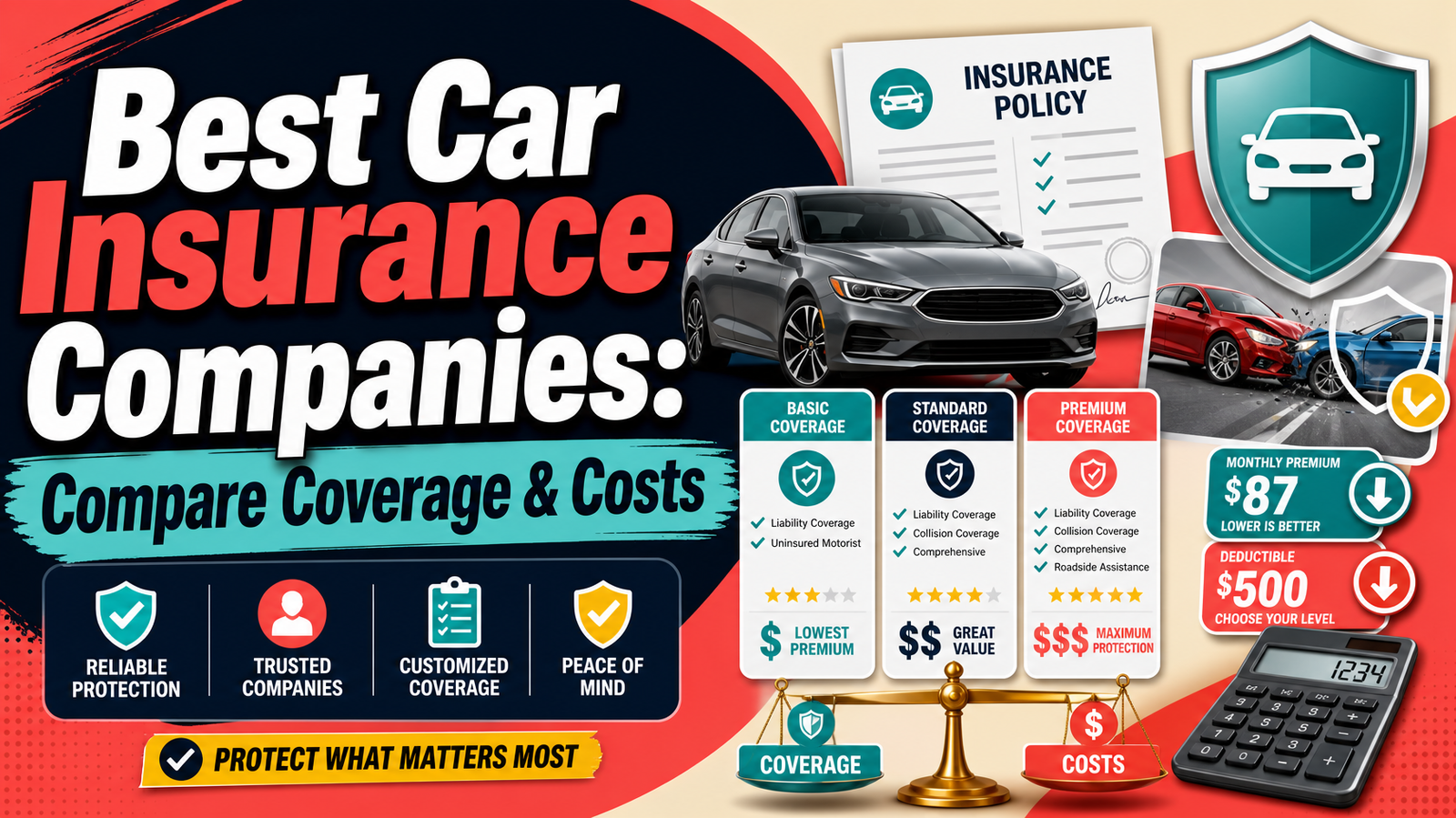
Choosing the right car insurance company is about more than finding the lowest monthly premium. A policy that looks affordable at first may offer limited protection, higher deductibles, or fewer benefits than another option. Understanding what you are paying for can make a major difference when you actually need to file a claim.
With several established auto insurance providers operating across the United States, drivers have different options to consider. Companies such as State Farm, GEICO, Progressive, Allstate, Nationwide, and USAA offer auto insurance products, but their availability, coverage options, and eligibility requirements can differ.
So, how do you decide which company is right for you?
The best approach is to compare coverage limits, premiums, deductibles, available discounts, claims services, and policy exclusions before making a decision. This guide explains the best car insurance companies to research, the types of auto insurance coverage available, and practical ways to find a policy that fits your needs.
Research and verification: The insurance information in this guide has been reviewed against official resources from the National Association of Insurance Commissioners (NAIC), state insurance regulators, and official insurance company websites. Company offerings, eligibility rules, discounts, and state requirements can change, so always confirm the latest details before purchasing a policy.

What Is Car Insurance and Why Is It Important?
Car insurance is an agreement between a vehicle owner and an insurance company. The customer pays a premium, and the insurer provides financial protection against specific losses covered by the policy.
Depending on the selected coverage, auto insurance can help pay for injuries, property damage, vehicle repairs, theft, and other covered incidents.
Most US states require drivers to carry at least a minimum amount of auto liability insurance. However, requirements are not identical across the country. New Hampshire has different financial responsibility rules, while other states establish specific mandatory insurance limits.
Choosing only the minimum required coverage may not provide enough financial protection after a serious accident. For example, if you cause an accident involving expensive property damage or injuries, your liability limits may not cover the entire amount.
This is why comparing car insurance coverage is just as important as comparing prices.
Best Car Insurance Companies in the USA
There is no single insurance company that offers the best solution for every driver. Premiums and policy options depend on location, driving history, vehicle details, eligibility, and selected coverage.
The following established insurers are worth including in your comparison.
1. State Farm
State Farm is one of the major insurance providers in the United States. It offers personal auto insurance along with other insurance products.
Drivers can explore liability, collision, comprehensive, and other available coverage options. The company also provides access to local insurance agents who can help customers understand their policy choices.
One feature worth researching is Drive Safe & Save, State Farm’s driving-based discount program. The company also lists potential savings for eligible students and customers who insure multiple vehicles or combine qualifying insurance policies.
What to compare:
- Available auto insurance coverage.
- Drive Safe & Save program eligibility.
- Good student and multi-vehicle discounts.
- Local agent assistance and claims services.
Official website: https://www.statefarm.com/insurance/auto
2. GEICO
GEICO is a well-known US auto insurance provider offering online quote tools and policy management services.
Drivers can explore different coverage options, request insurance quotes, and review potential discounts through its official website.
Its online services may be particularly useful for customers who prefer handling insurance-related tasks digitally rather than relying entirely on in-person assistance.
What to compare:
- Liability and vehicle damage coverage.
- Available discounts.
- Online policy management.
- Claims reporting and customer support.
Official website: https://www.geico.com/auto-insurance/
3. Progressive
Progressive offers auto insurance products and several tools that help customers explore coverage and pricing.
One program worth understanding is Snapshot, its usage-based insurance program. Depending on the state and applicable program terms, driving information may be used to determine potential insurance savings or pricing adjustments.
Drivers should review the program conditions before enrolling because participation and pricing effects can vary.
What to compare:
- Standard and optional coverage.
- Snapshot program requirements.
- Available discounts.
- Deductibles and policy limits.
Official website: https://www.progressive.com/auto/
4. Allstate
Allstate provides auto insurance and additional protection options for eligible drivers. Customers can research different coverage types, request quotes, and review available discounts.
Its Drivewise program is another feature worth researching. It is designed around driving behavior, with program availability and potential benefits depending on the applicable terms.
What to compare:
- Liability, collision, and comprehensive coverage.
- Drivewise availability.
- Eligible discounts.
- Claims services and agent support.
Official website: https://www.allstate.com/auto-insurance
5. Nationwide
Nationwide offers auto insurance and other financial protection products. Drivers can explore its insurance options and compare policy features according to their requirements.
Customers should review available coverage, discount eligibility, and policy conditions rather than assuming that every benefit is available in every state.
What to compare:
- Auto insurance coverage options.
- Available savings programs.
- Multi-policy discounts.
- Claims assistance and policy management.
Official website: https://www.nationwide.com/personal/insurance/auto/
6. USAA
USAA provides insurance and financial services primarily for eligible members of the military community and qualifying family members.
Its auto insurance products are worth researching if you meet the company’s membership requirements.
Before requesting a quote, check eligibility and review the available coverage options.
What to compare:
- Membership requirements.
- Auto insurance coverage.
- Available discounts.
- Claims support and policy services.
Official website: https://www.usaa.com/insurance/auto/
These companies are a comparison shortlist, not a ranking based on independently verified prices or customer satisfaction. The right provider depends on your individual requirements and location.
Types of Car Insurance Coverage You Should Understand
Before comparing insurance companies, understand the main types of auto insurance coverage. Each option protects against different risks.
1. Liability Coverage
Liability insurance helps pay for injuries or property damage you cause to other people in an accident for which you are legally responsible.
It generally includes:
- Bodily Injury Liability: Helps cover eligible medical expenses and other covered injury-related claims involving other people.
- Property Damage Liability: Helps pay for damage you cause to another person’s vehicle or property.
Most states require some form of liability insurance. The required limits depend on state law.
2. Collision Coverage
Collision insurance helps pay for covered damage to your own vehicle after an accident involving another vehicle or an object.
For example, if you accidentally hit another car or collide with a fence, collision coverage may help pay for repairs after the deductible.
It is generally optional under state law, but lenders and leasing companies may require it.
3. Comprehensive Coverage
Comprehensive insurance helps cover certain vehicle losses that do not result from a collision.
Depending on your policy, covered events may include:
- Vehicle theft.
- Fire damage.
- Hail and certain weather events.
- Vandalism.
- Falling objects.
- Animal-related damage.
This coverage is particularly worth considering if replacing your vehicle would create a financial burden.
4. Uninsured and Underinsured Motorist Coverage
Uninsured motorist coverage can help protect you when an at-fault driver has no applicable insurance.
Underinsured motorist coverage may help when the other driver’s insurance limits are insufficient to cover eligible losses.
The availability and requirements of these protections vary by state.
5. Personal Injury Protection and Medical Payments
Personal Injury Protection (PIP) can help cover certain medical expenses and, depending on state rules and policy terms, lost wages and other expenses.
Medical Payments (MedPay) generally helps pay eligible medical expenses for you and your passengers following a covered accident.
These are different coverage types, so check their specific benefits and limits.
6. Additional Optional Coverage
Some insurers offer additional protection that may be useful in certain situations.
- Rental Reimbursement: Helps cover eligible rental vehicle costs while your vehicle is being repaired after a covered claim.
- Roadside Assistance: May help with towing, flat tires, jump-starts, and certain roadside emergencies.
- GAP Insurance: Can help cover the difference between a vehicle’s covered value and the remaining loan balance in qualifying situations.
- New Car Replacement: Some policies offer additional protection for eligible newer vehicles declared a total loss.
Review the policy limits, exclusions, and eligibility conditions before adding optional coverage.
How to Compare the Best Car Insurance Companies
Finding the right auto insurance company requires more than checking monthly prices. Here are seven important factors to compare.
1. Compare Coverage Limits
Coverage limits represent the maximum amount an insurer will pay for certain covered claims.
For example, liability policies may have separate limits for bodily injury per person, bodily injury per accident, and property damage per accident.
When comparing quotes, make sure every company is offering the same limits. Otherwise, a lower quote may simply reflect less protection.
2. Compare Premiums and Total Costs
Your insurance premium is the amount you pay to maintain your policy. Insurers may offer monthly, six-month, or annual payment arrangements.
Compare the total policy cost rather than looking only at the advertised monthly payment.
Also check installment fees, down payments, available discounts, and any additional charges.
3. Review Deductibles
A deductible is the amount you pay toward certain covered claims before your insurer pays its share.
For example, suppose your approved collision repair costs $3,000 and your deductible is $500. The insurer would generally pay the remaining $2,500, subject to the policy terms.
A higher deductible may reduce your premium, but it also increases your out-of-pocket responsibility when making a claim.
Choose an amount you could realistically afford.
4. Check Available Discounts
Insurance companies may offer discounts to qualifying customers.
Common examples include:
- Safe driver discounts.
- Good student discounts.
- Multi-car discounts.
- Home and auto bundling.
- Low-mileage discounts.
- Vehicle safety feature discounts.
- Paperless billing or eligible payment discounts.
Discount availability and eligibility vary by company and state. For example, State Farm publishes its discount information and explains that savings depend on location and individual eligibility.
5. Research Claims Services
A company’s claims process is an important consideration when choosing insurance.
Research whether the insurer allows online claim reporting, provides mobile policy management, offers telephone assistance, and explains claim progress clearly.
You can also investigate complaint information through your state insurance department and the NAIC.
6. Check Financial Strength and Licensing
Consider reviewing independent financial strength ratings from agencies such as AM Best.
These ratings provide an assessment of an insurer’s financial strength, but they do not guarantee customer satisfaction or the outcome of an individual claim.
Also confirm that the insurance company is licensed to sell policies in your state.
7. Read Exclusions and Policy Conditions
Insurance policies contain exclusions and conditions explaining what is covered and what is not.
For example, a standard personal auto policy may not automatically cover commercial vehicle use or every rideshare activity.
If you use your vehicle for delivery or rideshare services, ask the insurer whether additional coverage is necessary.
What Factors Affect Car Insurance Rates?
Car insurance premiums are calculated using several factors. Insurers evaluate information to estimate the risk and potential cost of providing coverage.
Important factors may include:
Driving Record: Previous accidents, violations, and claims may affect pricing.
Location: Premiums can differ by state and ZIP code because accident frequency, theft, repair costs, and other risks vary.
Vehicle Type: The vehicle’s model, safety features, repair expenses, and value may influence its insurance cost.
Age and Experience: Insurers may consider a driver’s age and driving experience when evaluating risk.
Annual Mileage: How often and how far you drive can affect your premium.
Coverage Selection: Higher limits and additional coverage generally increase the cost of a policy.
Deductibles: Choosing a higher deductible may lower certain coverage costs, but increases your potential out-of-pocket expense.
Credit-Based Insurance Information: Some states permit insurers to use credit-based insurance information when setting rates, while other states restrict or prohibit certain uses.
Because insurance rating rules differ by state and insurer, the same driver may receive different quotes from different companies.
How to Find Affordable Car Insurance Without Sacrificing Coverage
Affordable car insurance does not have to mean choosing a policy with limited protection. The goal is to find suitable coverage at a competitive price.
Consider these practical steps:
- Request Multiple Quotes: Compare at least three providers using the same coverage limits and deductibles.
- Ask About Discounts: Contact insurers to identify savings for which you may qualify.
- Review Your Policy Regularly: Your mileage, vehicle value, and insurance needs can change over time.
- Consider Bundling: Check whether combining eligible home, renters, or auto insurance policies provides savings.
- Select a Suitable Deductible: Balance premium savings against the amount you could afford after a covered accident.
- Maintain Safe Driving Habits: A good driving record may help you qualify for certain discounts.
- Explore Low-Mileage Programs: Drivers who travel less may benefit from eligible usage-based or mileage-related insurance options.
Always compare the actual policy terms before making a decision.
Common Mistakes to Avoid When Choosing Car Insurance
Some drivers focus so heavily on price that they overlook important policy details.
Avoid these common mistakes:
- Choosing the cheapest policy without checking coverage limits.
- Ignoring your state’s minimum insurance requirements.
- Selecting a deductible you cannot comfortably afford.
- Assuming every type of accident or vehicle use is covered.
- Overlooking exclusions and optional benefits.
- Relying entirely on advertisements or promotional offers.
- Cancelling an existing policy before confirming replacement coverage is active.
Reading the policy documents carefully can help prevent unexpected expenses and misunderstandings.
Frequently Asked Questions About Car Insurance Companies
State Farm, GEICO, Progressive, Allstate, Nationwide, and USAA are established providers worth researching. The best choice depends on your location, eligibility, coverage needs, and individual quote.
Compare multiple quotes using identical coverage limits and deductibles. Then review premiums, discounts, claims services, financial strength, licensing, and policy exclusions.
There is no single cheapest provider for every driver. Prices depend on location, vehicle type, driving history, selected coverage, and other rating factors.
Full coverage is an informal term commonly used for a combination of liability, collision, and comprehensive coverage. It provides broader protection for your vehicle, while liability-only insurance generally covers certain injuries and property damage you cause to others.
Comprehensive coverage generally helps pay for a covered vehicle theft loss, subject to the deductible, limits, and policy conditions. Liability-only insurance generally does not cover theft of your own vehicle.
Drivers can generally change insurers before their existing policy expires. However, review cancellation fees, refund conditions, and policy requirements. Make sure replacement coverage is active before cancelling the existing policy.
Your coverage should meet state requirements and provide suitable financial protection. Consider your vehicle’s value, financial responsibilities, potential accident expenses, and any loan or lease requirements.
Final Thoughts
Choosing among the best car insurance companies in the USA requires more than finding the lowest advertised price. A suitable policy should offer the right combination of coverage, affordable premiums, reasonable deductibles, and dependable claims support.
State Farm, GEICO, Progressive, Allstate, Nationwide, and USAA provide useful starting points for researching available insurance options. However, their pricing, coverage availability, and eligibility requirements can differ significantly.
Take time to understand liability, collision, comprehensive, and optional coverage. Request multiple quotes, review discounts, and read the policy documents before making a final decision.
The goal is simple: choose car insurance that protects your financial interests while keeping your coverage costs manageable.